Method
HAJUC is an observatory for ordinary routes that behave unusually well.
The site was built around a simple editorial habit: walk slowly enough to notice why one passage lowers friction while another, only a block away, makes the body brace. HAJUC looks at spatial cues that are easy to miss when a city is described only through districts, attractions, or transit stops.
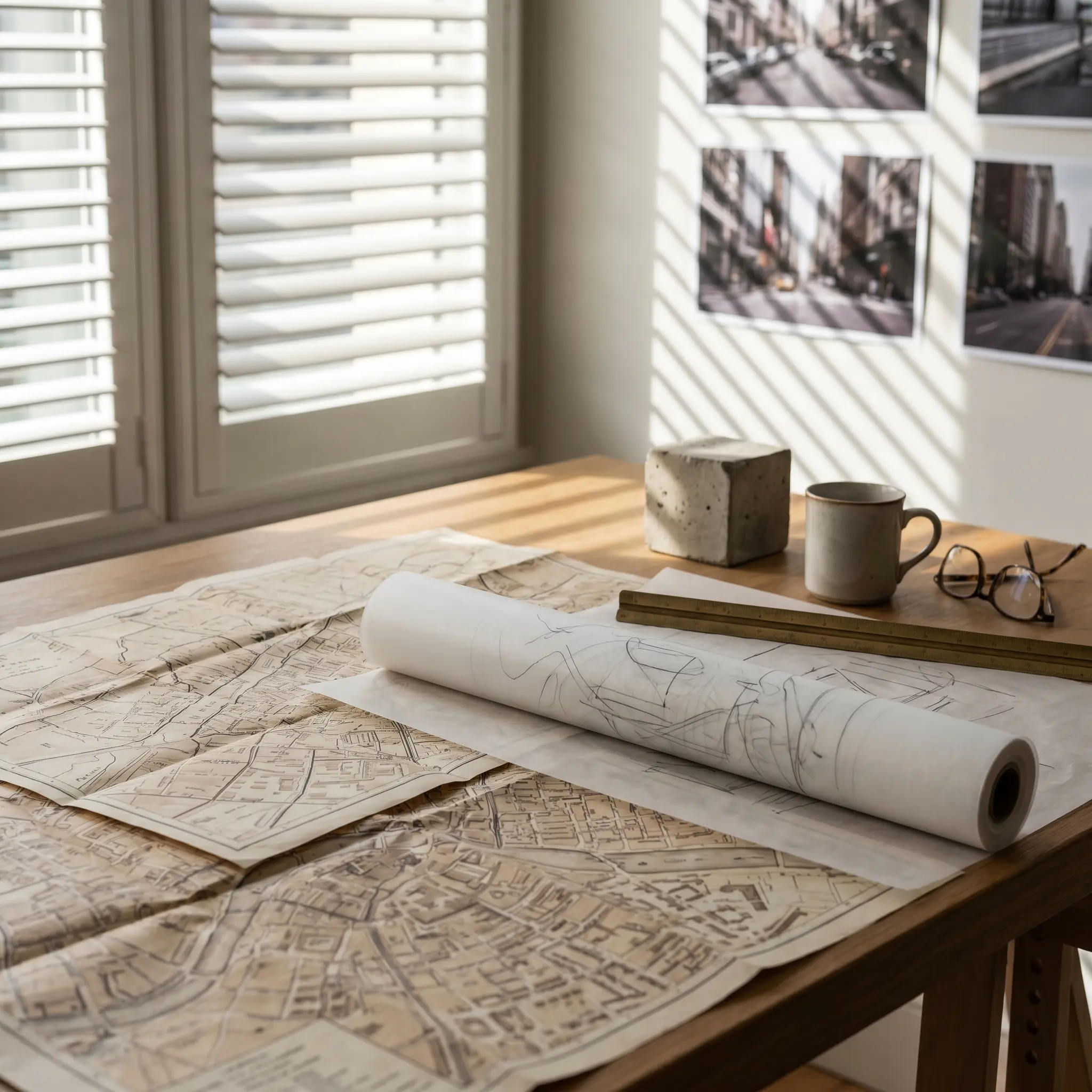
Walk twice
A route is checked in both directions so the comfortable line and the confusing line are not mistaken for the same experience.
Name the threshold
Notes identify where the city changes texture: canopy, stair, arcade, forecourt, underpass, setback, or service edge.
Describe the pressure
Crowding, glare, wind, traffic noise, and decision load are treated as observable route conditions.
Keep the finding portable
Each piece should help a reader recognize a similar passage in another city, not only admire one location.
What belongs in a HAJUC note
A good note begins with the bodily fact of the walk: where the eye lands, where the shoulders relax, where the path asks for a decision, and where the surrounding city becomes audible again. The writing is practical but not flattened into a checklist; it should keep enough texture for a reader to understand why the route works.
HAJUC favors passages that can teach: a station exit with a gentle waiting edge, a market cut-through that keeps orientation intact, a covered walkway that offers shelter without becoming a tunnel, or a plaza approach that lets people choose pace before they meet traffic.